
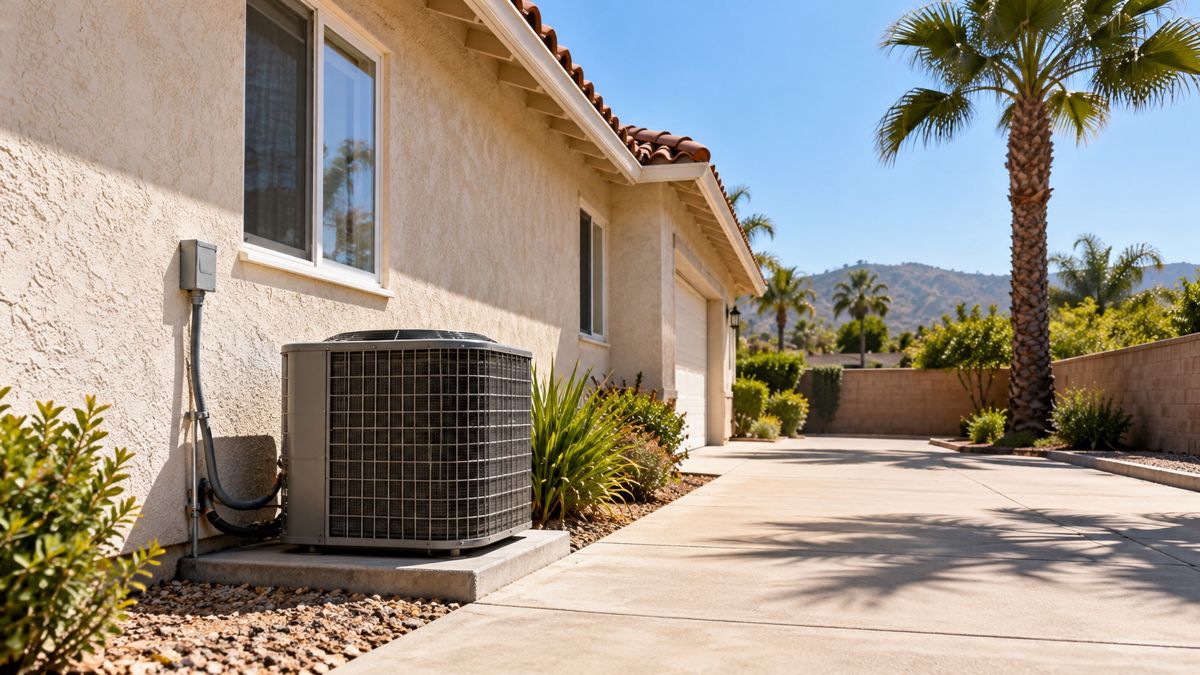
For a typical single-family home in Anaheim, a full central AC replacement often falls somewhere between about $5,000 and $12,000 installed. That is a rough guide based on broad market ranges across the United States, not a quote from this business or from any one contractor. Your number can land below or above that range, and the reasons are mostly about the house, not the name on the box.
This guide explains what moves the price, what is specific to homes in Anaheim and nearby towns, and how to compare quotes without getting lost in model numbers.
What is a realistic price range for a new central AC unit?
Think of three rough tiers. These are market guides only, and every home is different.
- Outdoor unit only: when the indoor coil and ductwork are in good shape and match the new unit, some jobs stay at the lower end of the range or below it. Many installers will not recommend this if the indoor coil is old.
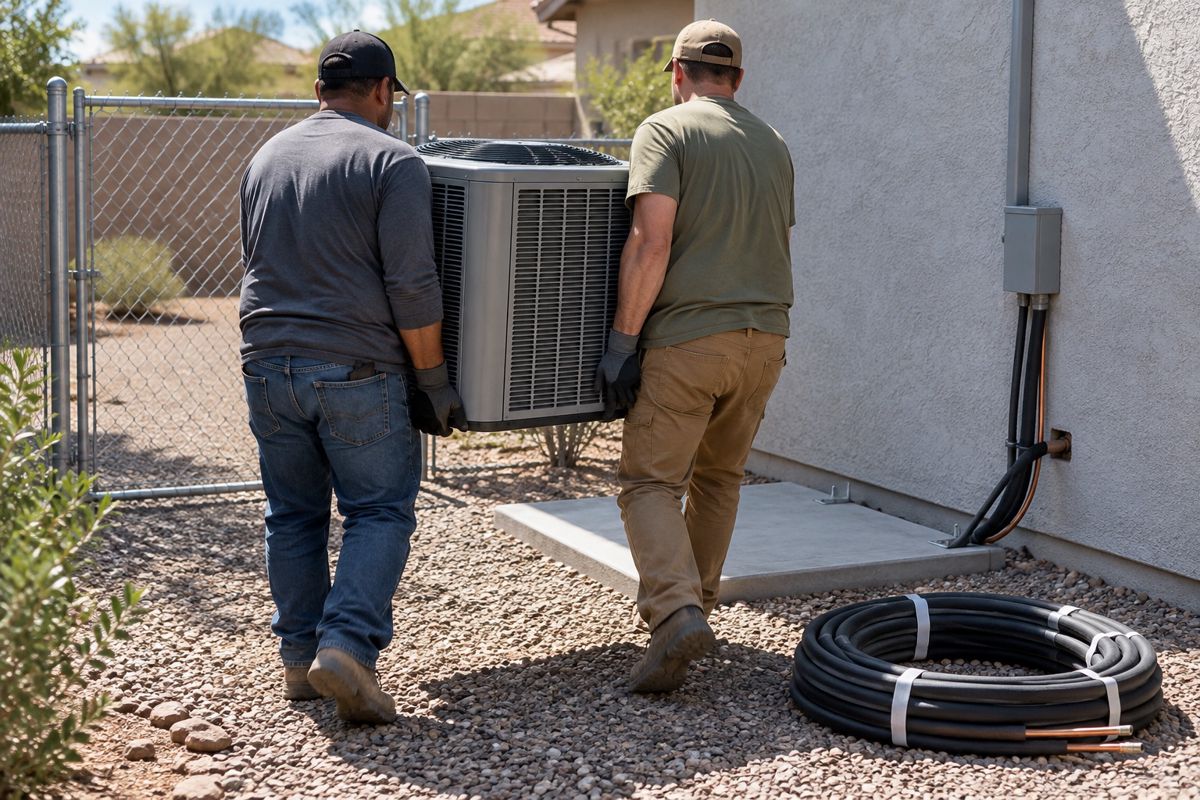
- Full system swap: new outdoor condenser, new indoor coil, new line set connections and a new thermostat. This is the most common job and sits in the middle of the range.
- System plus duct work or electrical upgrades: if ducts are leaking, undersized or crushed, or the electrical panel needs work, the total can pass the top of the range.
California adds some cost that other states do not, mostly permit and energy-code work. That is one reason quotes here can run higher than a national average for the same size of equipment.
What drives the price up or down?
Five things explain most of the gap between two quotes for the same house.
System size
Bigger homes need more capacity, measured in tons. A proper sizing visit looks at square footage, insulation, windows, sun exposure and duct layout. It is not a guess from the old unit's label. Oversized equipment cycles on and off, wears faster and handles humidity and comfort poorly.
Efficiency level
Higher efficiency models cost more up front. They use less electricity, which matters in Anaheim where cooling runs hard in summer and early fall. Two-stage and variable-speed units sit higher in price again but run quieter and hold temperature more evenly.
Ductwork condition
Old duct runs in many Anaheim homes leak, sag or have been squashed by past work. Fixing them adds cost, but a new unit on bad ducts will not perform as promised.
Where the equipment goes
Crews work differently for an attic air handler, a garage closet unit, a roof package unit and a ground-level pad. Tight attic access in summer adds labor time.
Permits and code work
Replacing a system generally needs a city mechanical permit, and California energy rules often call for testing or sealing of ducts on replacement. Ask whether the quote includes the permit and any testing.
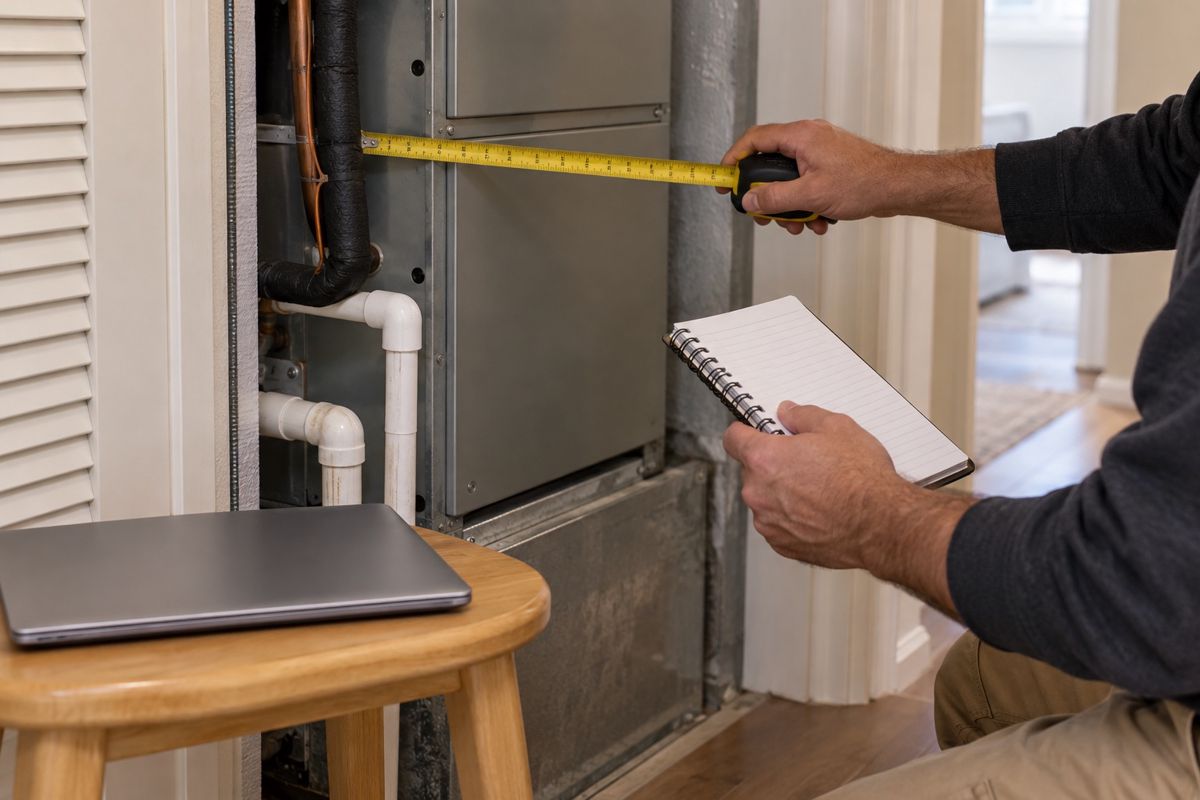
Why do attics, slabs and older ducts matter in Anaheim homes?
Much of the housing in Anaheim and the surrounding cities was built on concrete slabs, in the middle of the last century and in the decades after. Slab homes rarely have a basement or crawl space, so the furnace, air handler and ducts usually live in the attic or in a garage closet. That has two effects on cost.
First, attic work in a Southern California summer is slow. Installers plan their hours around heat, and a tight or hard-to-reach attic can mean extra time for the crew. Second, ducts in a hot attic lose a lot of cooling before air reaches a room. If the insulation on the ducts is old, brittle or missing, a new unit cannot make up for it. A good quote either includes duct testing and repair or states plainly that it does not.
Some Anaheim homes also have older packaged units on the roof or on a pad beside the house. Swapping those can cost differently from a split system, and a crane or roof access is sometimes part of the job.
How do SEER2 ratings and the refrigerant change affect the cost?
Two changes in the industry have nudged pricing in recent years, and they are worth knowing about when you read a quote.
The first is the move from SEER to SEER2, a newer test method with slightly stricter conditions. A SEER2 number looks a little lower than the older SEER number for the same equipment, so do not compare the two directly. Minimum efficiency levels also vary by region of the country, and California has its own energy standards on top of the federal ones.
The second is the phase-down of older refrigerants. Newer equipment is moving to different refrigerants with lower global warming impact. For a homeowner, this means new equipment may use a different refrigerant from your old system, so mixing an old indoor coil with a new outdoor unit is often not possible. If someone tells you it is, ask them to put that in writing. Rules and dates in this area are still changing, so ask the installer what applies to the equipment on your quote.
Should you repair the old unit or replace it?
A repair makes sense when the system is not very old, the problem is a single part, and the repair bill is a small share of the cost of a new system. Replacement starts to make sense when the unit is well into its second decade, the compressor has failed, the system needs repeated repairs, or it uses a refrigerant that is getting harder and more expensive to service.
One useful habit is to ask for the repair quote and the replacement quote together. That lets you see the full picture. If you are not sure where your system stands, start with our AC repair page, which explains how a diagnosis works and what usually goes wrong with cooling systems in this area.
How do you compare quotes fairly?
Get at least two written quotes for the same scope. Then line them up on these points:
- Equipment size in tons and the model numbers for the outdoor unit and the indoor coil.
- Efficiency rating, stated as SEER2.
- Whether ductwork repair, sealing and testing are included.
- Whether the city permit and any inspection are included.
- What the thermostat and any new wiring or electrical work involve.
- What the parts and labor coverage is, in writing, and who stands behind it.
- What is removed and hauled away.
A much lower price often means something is left out, such as the permit, the indoor coil or the duct work. Also ask to see the contractor's state license. California generally requires a license for HVAC jobs above a small dollar amount, and the state board lists licenses on its website, so you can check before you sign anything.
What is the next step?
If your system is cooling poorly, running constantly or getting old, the simplest step is to have the house looked at and get a written quote you can compare. You can read how replacement jobs usually run on our AC installation page, or look at how regular maintenance can extend the life of a system you already have. If you would rather talk it through, contact Anaheim HVAC and describe your home and what the system is doing.